LOADING ...
In response to evolving domestic opinion, eMedals Inc has made the conscious decision to remove the presentation of German Third Reich historical artifacts from our online catalogue. For three decades, eMedals Inc has made an effort to preserve history in all its forms. As historians and researchers, we have managed sensitive articles and materials with the greatest of care and respect for their past and present social context. We acknowledge the growing sentiments put forth by the Canadian public and have taken proactive actions to address this opinion.
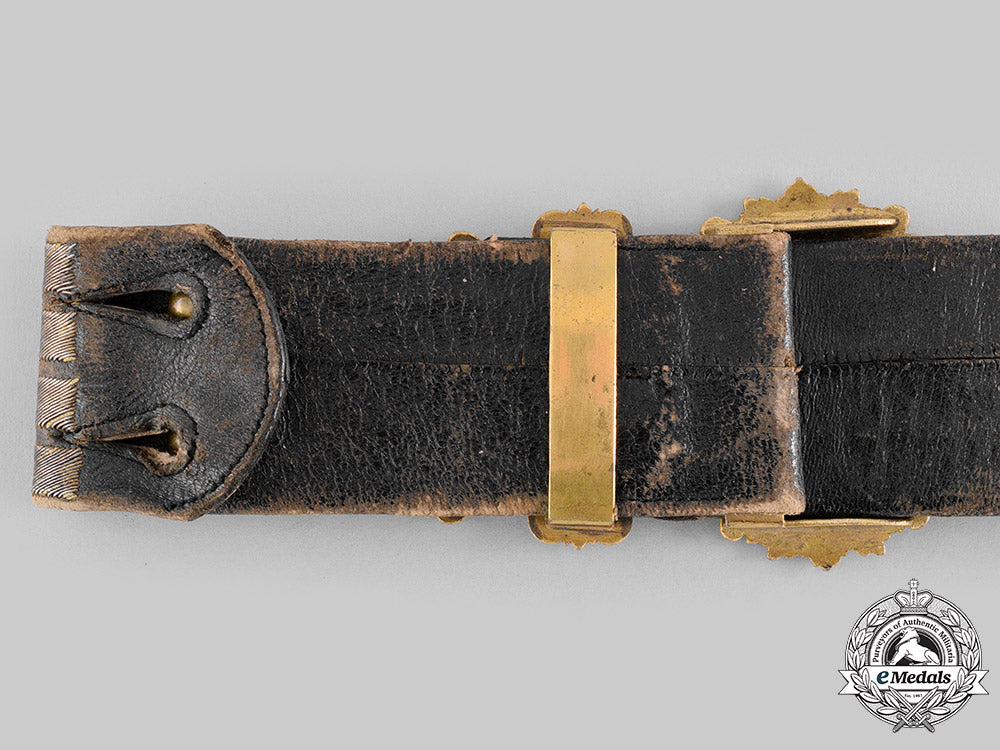
United Kingdom. A Victorian 21St (Empress Of India's) Lancers, Aka "Grey Lancers", Officer's Shoulder Pouch & Cross Belt, C.1880
SKU: ITEM: GB6901
Current Bid:
Your Max Bid:
Bid History:
Time Remaining:
Couldn't load pickup availability
Shipping Details
Shipping Details
eMedals offers rapid domestic and international shipping. Orders received prior to 12:00pm (EST) will be shipped on the same business day.* Orders placed on Canadian Federal holidays will be dispatched the subsequent business day. Courier tracking numbers are provided for all shipments. All items purchased from eMedals can be returned for a full monetary refund or merchandise credit, providing the criteria presented in our Terms & Conditions are met. *Please note that the addition of a COA may impact dispatch time.
Shipping Details
eMedals offers rapid domestic and international shipping. Orders received prior to 12:00pm (EST) will be shipped on the same business day.* Orders placed on Canadian Federal holidays will be dispatched the subsequent business day. Courier tracking numbers are provided for all shipments. All items purchased from eMedals can be returned for a full monetary refund or merchandise credit, providing the criteria presented in our Terms & Conditions are met. *Please note that the addition of a COA may impact dispatch time.
Description
Description
Pouch with a black-finished pebbled leather exterior, the front with a stiff-framed flap bearing a brass crowned cypher of Queen Victoria, the cypher the representative of the 21st Lancers and secured in place by a washer & nut combo on the underside, the cypher framed by three 10 mm wide stripes in angled rolled gold-coloured bullion wire, the stripes placed on the perimeter of the pouch and extend around to the reverse, the reverse with a short black leather strap stitched in place near the bottom, complemented by a brass bracket housing a post held in place via two pins on the bottom edge.
The interior of the pouch with a smooth leather finish, the underside of the flap is finished in black, the underside of the pouch finished in brown, the side panels and bottom unfinished. A black-finished leather tab with two die-holes stitched in place to the underside of the flap and when fed through the short strap on the reverse and secured to the brass post affixed to the bottom of the pouch, ensures a snug closure. There are brass elongated clusters of leafing affixed via two large brass pins to either end of the pouch, each with a loop and affixed to a large ring, each of the rings in turn housing an elongated rectangular loop with rounded corners for affixing the pouch to the cross belt, all the hardware in brass, the pouch measuring 150 mm (w) x 90 mm (h) x 18 mm (d).
The accompanying cross belt with a black-finished pebbled leather exterior on both sides, with a two-piece construction, the longer piece with a shorter piece placed on the underside of the longer piece at the right end, the two pieces linked by two brass buckles for length adjustment, the buckles bearing an ornate floral design and measuring 53 mm (w) x 78 mm (h) and 30 mm (w) x 68 mm (h) respectively. The end of the longer piece with a 58 mm (w) x 57.5 mm (h) triangular tab in brass bearing a floral design affixed via three prongs. The upper on both pieces with four 10 mm wide stripes in angled rolled gold-coloured bullion wire running along the entire length of the belt and extending around to the reverse.
The belt incorporates two brass posts fed through the slits placed in the leather between the first and second rows and the third and fourth rows of the gold-coloured bullion wire stripes at both ends. Each end of the cross belt where the bullion stripes end have two slotted holes, designed to receive the aforementioned brass posts on the cross belt, in order to secure the pouch via the elongated rectangular loops on its sides, the belt measuring 1,070 mm in length, with 60 mm at either end folded over to the reverse, and measuring 53 mm in width. The leather on the pouch exhibits wear along the top edge, on either side of the cypher and the reverse, with light wear on the interior, the cross belt with crazing and light wear present in the leather, with very few interruptions in the gold-coloured bullion wire on both pieces, displaying intact stitching throughout, the brass hardware with traces of spotting and retaining their detail. Better than very fine.
Footnote: The 21st Lancers (Empress of India's) was a cavalry regiment of the British Army. The regiment was originally raised in Bengal by the ast India Company in 1858 as the 3rd Bengal European Light Cavalry, for service in the Indian Rebellion. As with all other "European" units of the Company, it was placed under the command of the British Crown in 1858, and formally moved into the British Army in 1862, when it was designated as a hussar regiment and titled the 21st Regiment of Hussars. A detachment saw service in the 1884-85 expedition to the Sudan, with the Light Camel Regiment. In 1897, it was re-designated as a lancer regiment, becoming the 21st Lancers. The Indian origin of the regiment was commemorated in its "French grey" facings - this distinctive light blue/grey shade having previously been the uniform colour of the East India Company's eight regiments of Bengal Native Cavalry. In 1898, the regiment served in Sudan during the Mahdist War, as the only British cavalry unit involved. It was there that the full regiment charged with lances in the classic cavalry style during the Battle of Omdurman in September 1898. Of less than 400 men involved in the charge 70 were killed and wounded[3] and the regiment won three Victoria Crosses. These three were Private Thomas Byrne, Lieutenant Raymond de Montmorency and Captain Paul Kenna.
This spectacular encounter earned considerable public attention and praise for the regiment, though it was also criticized as a costly and unnecessary anachronism, since the 2,000 Dervish spearmen dispersed by the 21st Lancers could have been destroyed by rifle fire with few if any British losses. Winston Churchill, then an officer of the 4th Hussars, rode with the unit. "Omdurman" was the regiment's only battle honour, giving rise to the satirical regimental motto of "thou shalt not kill." That same year, the regiment was given the title 21st (Empress of India's) Lancers, taking the name from Queen Victoria who was the Empress of India. The regiment was moved to Dublin in 1899, and served in Ireland for several years. In 1912, it was again posted to India. The 21st Lancers did not see service on the Western Front during the First World War, being the only regular cavalry regiment of the British Army to spend the duration of the war in India. The regiment did however see action on the North-West Frontier during 1915-16, with one trooper, Charles Hull, receiving the Victoria Cross. A single squadron made up of reservists served in France in 1916-17, attached to XIV Corps. The regiment was re-titled 21st Lancers (Empress of India's) in 1921 and shortly thereafter, disbanded as part of the post-War reduction in forces, and though a cadre, was briefly resurrected in 1922, in order to amalgamate with the 17th Lancers (Duke of Cambridge's Own), to form the 17th/21st Lancers.
Description
Pouch with a black-finished pebbled leather exterior, the front with a stiff-framed flap bearing a brass crowned cypher of Queen Victoria, the cypher the representative of the 21st Lancers and secured in place by a washer & nut combo on the underside, the cypher framed by three 10 mm wide stripes in angled rolled gold-coloured bullion wire, the stripes placed on the perimeter of the pouch and extend around to the reverse, the reverse with a short black leather strap stitched in place near the bottom, complemented by a brass bracket housing a post held in place via two pins on the bottom edge.
The interior of the pouch with a smooth leather finish, the underside of the flap is finished in black, the underside of the pouch finished in brown, the side panels and bottom unfinished. A black-finished leather tab with two die-holes stitched in place to the underside of the flap and when fed through the short strap on the reverse and secured to the brass post affixed to the bottom of the pouch, ensures a snug closure. There are brass elongated clusters of leafing affixed via two large brass pins to either end of the pouch, each with a loop and affixed to a large ring, each of the rings in turn housing an elongated rectangular loop with rounded corners for affixing the pouch to the cross belt, all the hardware in brass, the pouch measuring 150 mm (w) x 90 mm (h) x 18 mm (d).
The accompanying cross belt with a black-finished pebbled leather exterior on both sides, with a two-piece construction, the longer piece with a shorter piece placed on the underside of the longer piece at the right end, the two pieces linked by two brass buckles for length adjustment, the buckles bearing an ornate floral design and measuring 53 mm (w) x 78 mm (h) and 30 mm (w) x 68 mm (h) respectively. The end of the longer piece with a 58 mm (w) x 57.5 mm (h) triangular tab in brass bearing a floral design affixed via three prongs. The upper on both pieces with four 10 mm wide stripes in angled rolled gold-coloured bullion wire running along the entire length of the belt and extending around to the reverse.
The belt incorporates two brass posts fed through the slits placed in the leather between the first and second rows and the third and fourth rows of the gold-coloured bullion wire stripes at both ends. Each end of the cross belt where the bullion stripes end have two slotted holes, designed to receive the aforementioned brass posts on the cross belt, in order to secure the pouch via the elongated rectangular loops on its sides, the belt measuring 1,070 mm in length, with 60 mm at either end folded over to the reverse, and measuring 53 mm in width. The leather on the pouch exhibits wear along the top edge, on either side of the cypher and the reverse, with light wear on the interior, the cross belt with crazing and light wear present in the leather, with very few interruptions in the gold-coloured bullion wire on both pieces, displaying intact stitching throughout, the brass hardware with traces of spotting and retaining their detail. Better than very fine.
Footnote: The 21st Lancers (Empress of India's) was a cavalry regiment of the British Army. The regiment was originally raised in Bengal by the ast India Company in 1858 as the 3rd Bengal European Light Cavalry, for service in the Indian Rebellion. As with all other "European" units of the Company, it was placed under the command of the British Crown in 1858, and formally moved into the British Army in 1862, when it was designated as a hussar regiment and titled the 21st Regiment of Hussars. A detachment saw service in the 1884-85 expedition to the Sudan, with the Light Camel Regiment. In 1897, it was re-designated as a lancer regiment, becoming the 21st Lancers. The Indian origin of the regiment was commemorated in its "French grey" facings - this distinctive light blue/grey shade having previously been the uniform colour of the East India Company's eight regiments of Bengal Native Cavalry. In 1898, the regiment served in Sudan during the Mahdist War, as the only British cavalry unit involved. It was there that the full regiment charged with lances in the classic cavalry style during the Battle of Omdurman in September 1898. Of less than 400 men involved in the charge 70 were killed and wounded[3] and the regiment won three Victoria Crosses. These three were Private Thomas Byrne, Lieutenant Raymond de Montmorency and Captain Paul Kenna.
This spectacular encounter earned considerable public attention and praise for the regiment, though it was also criticized as a costly and unnecessary anachronism, since the 2,000 Dervish spearmen dispersed by the 21st Lancers could have been destroyed by rifle fire with few if any British losses. Winston Churchill, then an officer of the 4th Hussars, rode with the unit. "Omdurman" was the regiment's only battle honour, giving rise to the satirical regimental motto of "thou shalt not kill." That same year, the regiment was given the title 21st (Empress of India's) Lancers, taking the name from Queen Victoria who was the Empress of India. The regiment was moved to Dublin in 1899, and served in Ireland for several years. In 1912, it was again posted to India. The 21st Lancers did not see service on the Western Front during the First World War, being the only regular cavalry regiment of the British Army to spend the duration of the war in India. The regiment did however see action on the North-West Frontier during 1915-16, with one trooper, Charles Hull, receiving the Victoria Cross. A single squadron made up of reservists served in France in 1916-17, attached to XIV Corps. The regiment was re-titled 21st Lancers (Empress of India's) in 1921 and shortly thereafter, disbanded as part of the post-War reduction in forces, and though a cadre, was briefly resurrected in 1922, in order to amalgamate with the 17th Lancers (Duke of Cambridge's Own), to form the 17th/21st Lancers.

You May Also Like
United Kingdom. The Handley Page Halifax, by K. A. Merrick, Signed
GB8679
United Kingdom. The Boer War Casualty Roll 1899-1902, Alexander M. Palmer
GB8680
Germany, Heer. A Lot of Award Documents to Wilhelm Duschl, Battle of Crete Combatant
G62942
United States. Two Second War Medal Bars to Joseph Edwin Twiss, US Navy
M0625-146
Czechoslovakia, Republic. A Lot of Five Medals
M0625-145
-
United Kingdom. The Handley Page Halifax, by K. A. Merrick, Signed
GB8679
Add to CartRegular price $200 USDRegular price $0 USD Sale price $200 USDUnit price / per -
United Kingdom. The Boer War Casualty Roll 1899-1902, Alexander M. Palmer
GB8680
Add to CartRegular price $75 USDRegular price $0 USD Sale price $75 USDUnit price / per -
Germany, Heer. A Lot of Award Documents to Wilhelm Duschl, Battle of Crete Combatant
G62942
Add to CartRegular price $810 USDRegular price $0 USD Sale price $810 USDUnit price / per -
United States. Two Second War Medal Bars to Joseph Edwin Twiss, US Navy
M0625-146
Add to CartRegular price $200 USDRegular price $0 USD Sale price $200 USDUnit price / per -
Czechoslovakia, Republic. A Lot of Five Medals
M0625-145
Add to CartRegular price $200 USDRegular price $0 USD Sale price $200 USDUnit price / per
Do you have a similar item you are interested in selling?
Please complete the form and our client care representatives will contact you.
Sell Item