LOADING ...
In response to evolving domestic opinion, eMedals Inc has made the conscious decision to remove the presentation of German Third Reich historical artifacts from our online catalogue. For three decades, eMedals Inc has made an effort to preserve history in all its forms. As historians and researchers, we have managed sensitive articles and materials with the greatest of care and respect for their past and present social context. We acknowledge the growing sentiments put forth by the Canadian public and have taken proactive actions to address this opinion.
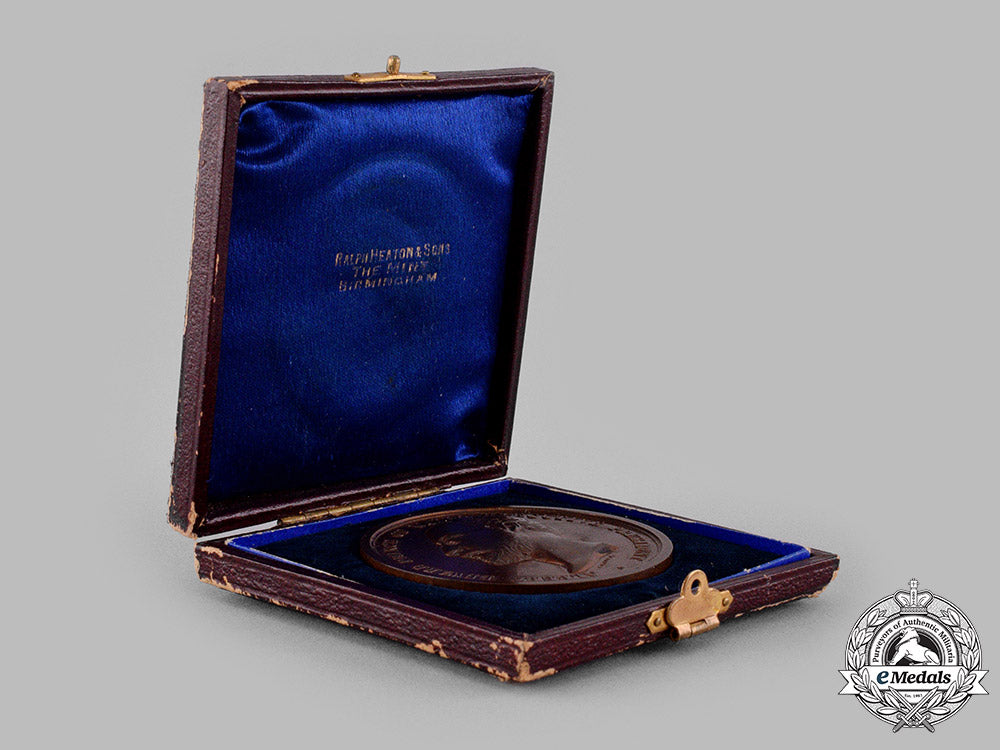
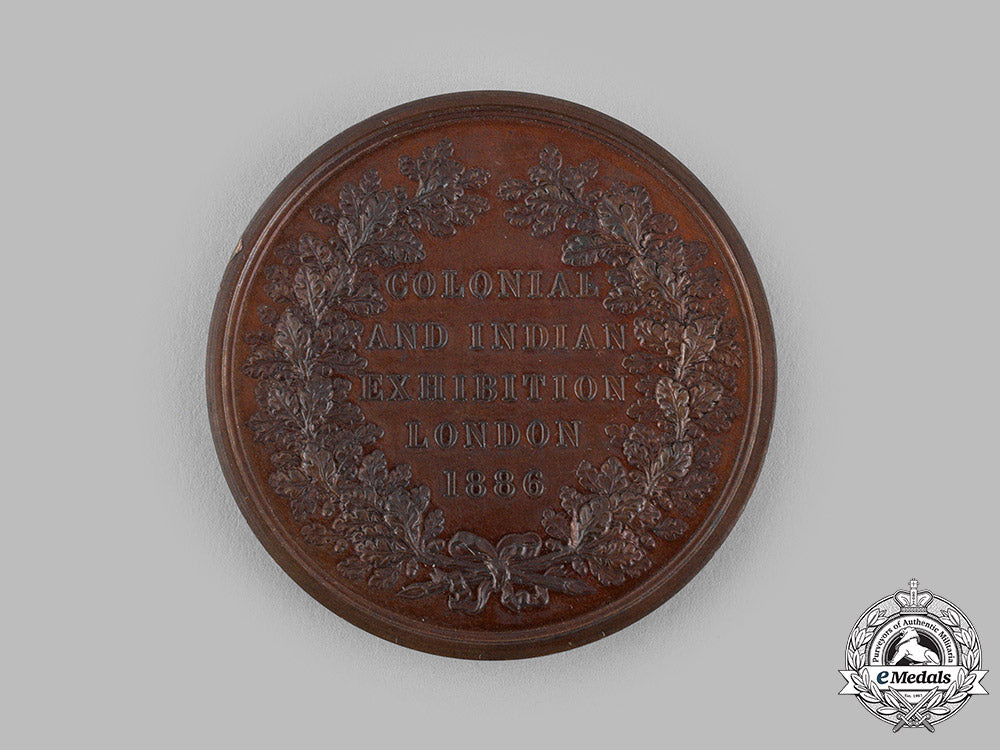
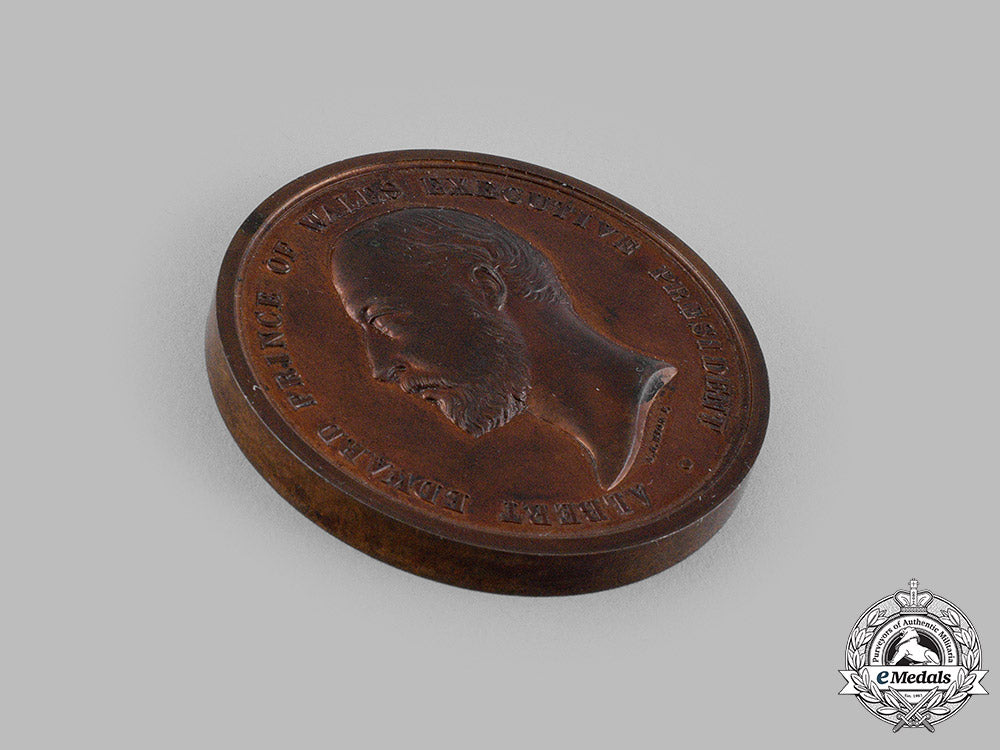
United Kingdom. A Colonial And Indian Exhibition Award Medal 1886
SKU: ITEM: GB6883
Current Bid:
Your Max Bid:
Bid History:
Time Remaining:
Couldn't load pickup availability
Shipping Details
Shipping Details
eMedals offers rapid domestic and international shipping. Orders received prior to 12:00pm (EST) will be shipped on the same business day.* Orders placed on Canadian Federal holidays will be dispatched the subsequent business day. Courier tracking numbers are provided for all shipments. All items purchased from eMedals can be returned for a full monetary refund or merchandise credit, providing the criteria presented in our Terms & Conditions are met. *Please note that the addition of a COA may impact dispatch time.
Shipping Details
eMedals offers rapid domestic and international shipping. Orders received prior to 12:00pm (EST) will be shipped on the same business day.* Orders placed on Canadian Federal holidays will be dispatched the subsequent business day. Courier tracking numbers are provided for all shipments. All items purchased from eMedals can be returned for a full monetary refund or merchandise credit, providing the criteria presented in our Terms & Conditions are met. *Please note that the addition of a COA may impact dispatch time.
Description
Description
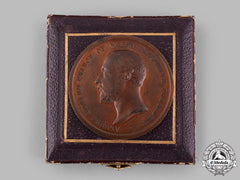
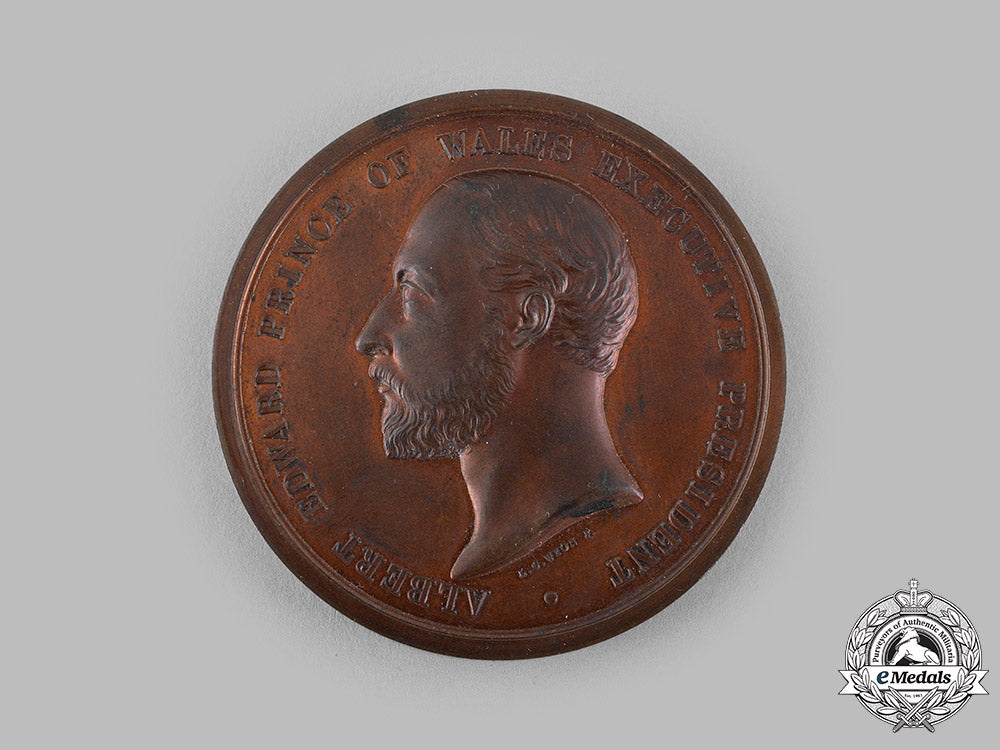
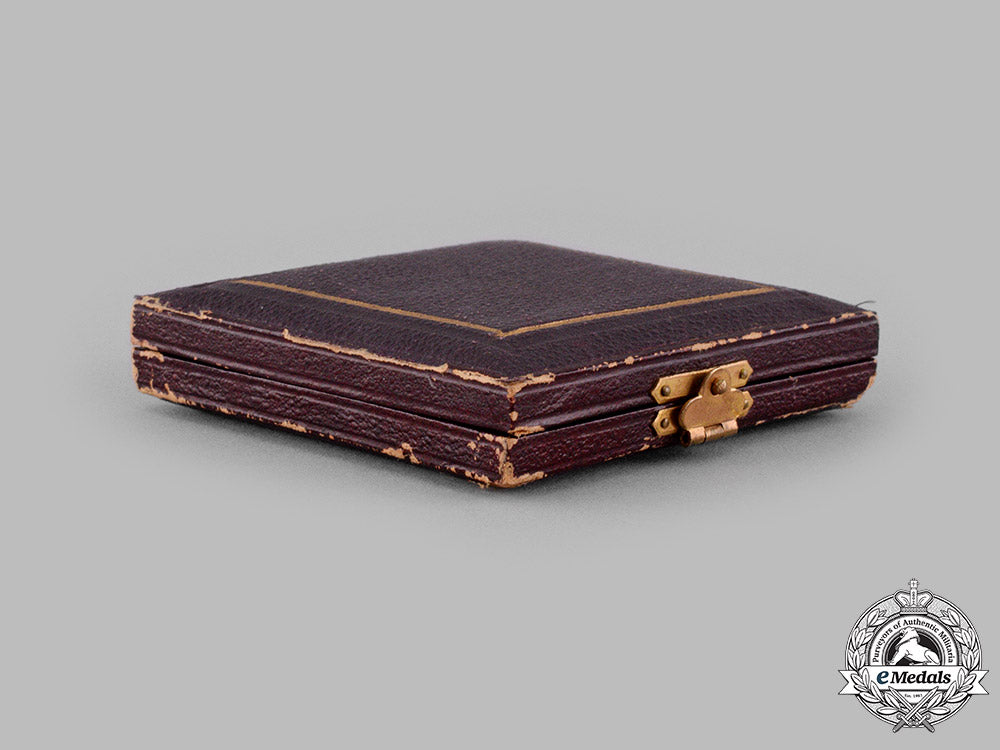
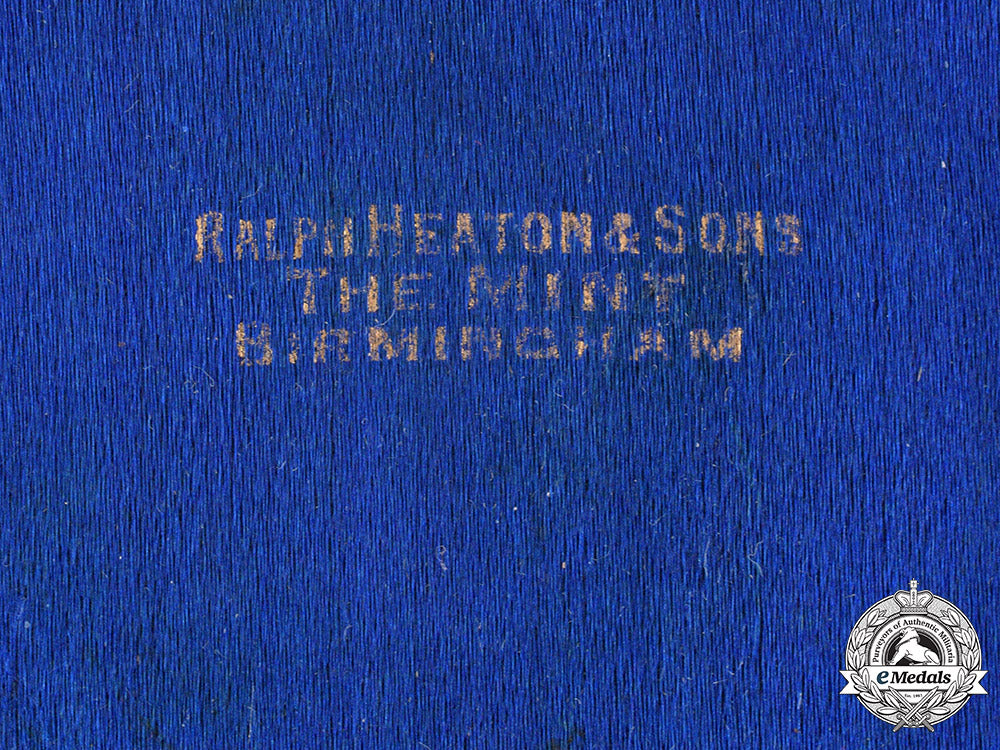
In bronze, obverse illustrating the left-facing bust of Albert Edward, Prince of Wales, later Edward VII (1841-1910), surrounded by the inscription "ALBERT EDWARD PRINCE OF WALES EXECUTIVE PRESIDENT" and engraved marked "L.C. WYON F." (Leonard Wyon), reverse inscribed "COLONIAL AND INDIAN EXHIBITION LONDON 1886" within a wreath of oak leaves, measuring 52 mm in diameter, extremely fine. In its hardshelled case of issue, dark brown pebbled exterior, inside lid lined in blue satin, padded and maker marked "RALPH HEATON & SONS / THE MINT / BIRMINGHAM", navy blue felt recessed medal bed, wear evident on the exterior, case fine.
Footnote: The Colonial and Indian Exhibition of 1886 was a very substantial exhibition held in South Kensington in London, and intended (in the words of the then Prince of Wales) "to stimulate commerce and strengthen the bonds of union now existing in every portion of her Majesty's Empire". The exhibition was opened by Queen Victoria, and when it closed had received 5.5 million visitors. It was housed in a collection of purpose-built buildings designed in an Indian style. Exhibits shown included a Māori tomb from New Zealand, a ceremonial sword from the colony of Lagos, a grasshopper swatter from the Straits Settlements, and Albert Bierstadt's painting of the Bahama Islands After A Norther was displayed in the West Indian gallery, and admired by the Prince of Wales. The India artware section was split into different areas representing the different princely states. The Rajputana entrance was a large Jaipur gate constructed of and provided by the then Maharaja of Jaipur. The Gwalior gateway which had been displayed at the Calcutta International Exhibition (1883) was loaned by the Victoria and Albert Museum. Several dozen Indians were imported, reputedly from the Agra jail, to serve as living exhibits; they were described as artisans. It appears that they were trained in their crafts as part of the British Empire's long-term project to "reform the criminal castes". Approximately 5,000 medals were struck, engraved by Leonard Wyon and minted in Birmingham by Ralph Heaton & Sons, who charged £145 per 1,000 medals. The medals were presented with a diploma to each person who took part in the Indian and Colonial exhibition, the recipient's name not inscribed.
Description
In bronze, obverse illustrating the left-facing bust of Albert Edward, Prince of Wales, later Edward VII (1841-1910), surrounded by the inscription "ALBERT EDWARD PRINCE OF WALES EXECUTIVE PRESIDENT" and engraved marked "L.C. WYON F." (Leonard Wyon), reverse inscribed "COLONIAL AND INDIAN EXHIBITION LONDON 1886" within a wreath of oak leaves, measuring 52 mm in diameter, extremely fine. In its hardshelled case of issue, dark brown pebbled exterior, inside lid lined in blue satin, padded and maker marked "RALPH HEATON & SONS / THE MINT / BIRMINGHAM", navy blue felt recessed medal bed, wear evident on the exterior, case fine.
Footnote: The Colonial and Indian Exhibition of 1886 was a very substantial exhibition held in South Kensington in London, and intended (in the words of the then Prince of Wales) "to stimulate commerce and strengthen the bonds of union now existing in every portion of her Majesty's Empire". The exhibition was opened by Queen Victoria, and when it closed had received 5.5 million visitors. It was housed in a collection of purpose-built buildings designed in an Indian style. Exhibits shown included a Māori tomb from New Zealand, a ceremonial sword from the colony of Lagos, a grasshopper swatter from the Straits Settlements, and Albert Bierstadt's painting of the Bahama Islands After A Norther was displayed in the West Indian gallery, and admired by the Prince of Wales. The India artware section was split into different areas representing the different princely states. The Rajputana entrance was a large Jaipur gate constructed of and provided by the then Maharaja of Jaipur. The Gwalior gateway which had been displayed at the Calcutta International Exhibition (1883) was loaned by the Victoria and Albert Museum. Several dozen Indians were imported, reputedly from the Agra jail, to serve as living exhibits; they were described as artisans. It appears that they were trained in their crafts as part of the British Empire's long-term project to "reform the criminal castes". Approximately 5,000 medals were struck, engraved by Leonard Wyon and minted in Birmingham by Ralph Heaton & Sons, who charged £145 per 1,000 medals. The medals were presented with a diploma to each person who took part in the Indian and Colonial exhibition, the recipient's name not inscribed.

You May Also Like
Russia, Imperial. A Rare Order of Saint Stanislaus, I Class Cross Set, by Keibel
M0367-42
Germany, Heer. A Rare Großdeutschland Division Service Tunic for a Leutnant of Engineers, Late-War Example
G62717
Germany, Federal Republic. The Bundesmarine Uniform Of Kapitän Zur See Hans Jenisch, U-Boat Ace And Knight’s Cross Recipient
M0540-88
Germany, Heer. A 7. Gebirgs Division POW Trench Art Commemorative Campaign Plaque
M0320-10
Germany, Wehrmacht. An M30 Gas Mask, with Canister
G62679
-
Russia, Imperial. A Rare Order of Saint Stanislaus, I Class Cross Set, by Keibel
M0367-42
Add to CartRegular price $9,600 USDRegular price $0 USD Sale price $9,600 USDUnit price / per -
Germany, Heer. A Rare Großdeutschland Division Service Tunic for a Leutnant of Engineers, Late-War Example
G62717
Add to CartRegular price $3,375 USDRegular price $0 USD Sale price $3,375 USDUnit price / per -
Germany, Federal Republic. The Bundesmarine Uniform Of Kapitän Zur See Hans Jenisch, U-Boat Ace And Knight’s Cross Recipient
M0540-88
Add to CartRegular price $945 USDRegular price $0 USD Sale price $945 USDUnit price / per -
Germany, Heer. A 7. Gebirgs Division POW Trench Art Commemorative Campaign Plaque
M0320-10
Add to CartRegular price $108 USDRegular price $0 USD Sale price $108 USDUnit price / per -
Germany, Wehrmacht. An M30 Gas Mask, with Canister
G62679
Add to CartRegular price $340 USDRegular price $0 USD Sale price $340 USDUnit price / per
Do you have a similar item you are interested in selling?
Please complete the form and our client care representatives will contact you.
Sell Item