LOADING ...
In response to evolving domestic opinion, eMedals Inc has made the conscious decision to remove the presentation of German Third Reich historical artifacts from our online catalogue. For three decades, eMedals Inc has made an effort to preserve history in all its forms. As historians and researchers, we have managed sensitive articles and materials with the greatest of care and respect for their past and present social context. We acknowledge the growing sentiments put forth by the Canadian public and have taken proactive actions to address this opinion.
Germany, Weimar Republic. Freikorps Schlageter Badge; Second Type, By Paul Küst
SKU: ITEM: G36882
Current Bid:
Your Max Bid:
Bid History:
Time Remaining:
Couldn't load pickup availability
Shipping Details
Shipping Details
eMedals offers rapid domestic and international shipping. Orders received prior to 12:00pm (EST) will be shipped on the same business day.* Orders placed on Canadian Federal holidays will be dispatched the subsequent business day. Courier tracking numbers are provided for all shipments. All items purchased from eMedals can be returned for a full monetary refund or merchandise credit, providing the criteria presented in our Terms & Conditions are met. *Please note that the addition of a COA may impact dispatch time.
Shipping Details
eMedals offers rapid domestic and international shipping. Orders received prior to 12:00pm (EST) will be shipped on the same business day.* Orders placed on Canadian Federal holidays will be dispatched the subsequent business day. Courier tracking numbers are provided for all shipments. All items purchased from eMedals can be returned for a full monetary refund or merchandise credit, providing the criteria presented in our Terms & Conditions are met. *Please note that the addition of a COA may impact dispatch time.
Description
Description
(Schlageter Abzeichen). Constructed of heavily silvered bronze, second type; with a vertical pinback; maker marked "PAUL KÜST ABZEICHEN ORDENFABRIK BERLIN S W 19", marked "GES. GESCH." (Gesetzlich Geschützt) and "101" on the reverse, measuring 48.23 mm (w) x 60.58 mm (h); weighing 40.9 grams; in overall extremely fine condition.
Footnote: Albert Leo Schlageter (August 12, 1894 - May 26, 1923) was a member of the German Freikorps. After the outbreak of the First World War, he became a voluntary emergency worker for the military. During the war, he participated in several battles, notably Ypres (1915), the Somme (1916) and Verdun, earning both the Iron Cross First and Second Classes. Following his promotion to second lieutenant, he took part in the Third Battle of Ypres (1917). After the war and his dismissal from the greatly reduced army, Schlageter described himself as a student of political sciences, but he studied the subject at the most for one year. About this time, he became a member of a right-wing Catholic student group. Soon he also joined the Freikorps and took part in the Kapp Putsch and other battles between military and communist factions that were convulsing Germany. His unit also took part in the Silesian Uprisings fighting on the German side. Already close to Nazis, around the time of the Battle of Annaberg of 1921, Schlageter's unit merged with the emerging Nazi Party. During the Third Silesian Uprising of 1921, Schlageter became infamous for persecuting local people and for terrorist actions against both Poles and Germans whom he and his group perceived as opposing his cause. Following the French occupation of the Ruhr in 1923, he led a group of nationalists in sabotage operations against the occupying force. The group managed to derail a number of trains. On April 7, 1923, information on Schlageter and his activities was obtained by the French, and he was arrested the following day. Tried by court-martial on May 7, 1923, he was condemned to death. On the morning of May 26th, he was executed on the Golzheimer heath near Düsseldorf. His way of death fostered an aura of martyrdom around him, which was cultivated by German nationalist groups, in particular the Nazi Party. During the Third Reich, he was widely commemorated as a national hero.
Description
(Schlageter Abzeichen). Constructed of heavily silvered bronze, second type; with a vertical pinback; maker marked "PAUL KÜST ABZEICHEN ORDENFABRIK BERLIN S W 19", marked "GES. GESCH." (Gesetzlich Geschützt) and "101" on the reverse, measuring 48.23 mm (w) x 60.58 mm (h); weighing 40.9 grams; in overall extremely fine condition.
Footnote: Albert Leo Schlageter (August 12, 1894 - May 26, 1923) was a member of the German Freikorps. After the outbreak of the First World War, he became a voluntary emergency worker for the military. During the war, he participated in several battles, notably Ypres (1915), the Somme (1916) and Verdun, earning both the Iron Cross First and Second Classes. Following his promotion to second lieutenant, he took part in the Third Battle of Ypres (1917). After the war and his dismissal from the greatly reduced army, Schlageter described himself as a student of political sciences, but he studied the subject at the most for one year. About this time, he became a member of a right-wing Catholic student group. Soon he also joined the Freikorps and took part in the Kapp Putsch and other battles between military and communist factions that were convulsing Germany. His unit also took part in the Silesian Uprisings fighting on the German side. Already close to Nazis, around the time of the Battle of Annaberg of 1921, Schlageter's unit merged with the emerging Nazi Party. During the Third Silesian Uprising of 1921, Schlageter became infamous for persecuting local people and for terrorist actions against both Poles and Germans whom he and his group perceived as opposing his cause. Following the French occupation of the Ruhr in 1923, he led a group of nationalists in sabotage operations against the occupying force. The group managed to derail a number of trains. On April 7, 1923, information on Schlageter and his activities was obtained by the French, and he was arrested the following day. Tried by court-martial on May 7, 1923, he was condemned to death. On the morning of May 26th, he was executed on the Golzheimer heath near Düsseldorf. His way of death fostered an aura of martyrdom around him, which was cultivated by German nationalist groups, in particular the Nazi Party. During the Third Reich, he was widely commemorated as a national hero.

You May Also Like
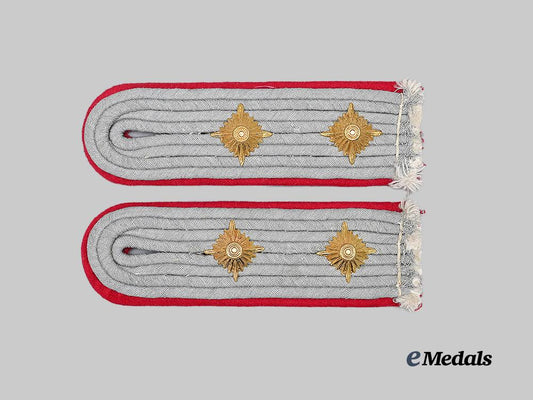
Germany, Heer. A Set of General Staff Hauptmann Shoulder Boards
M0676-458
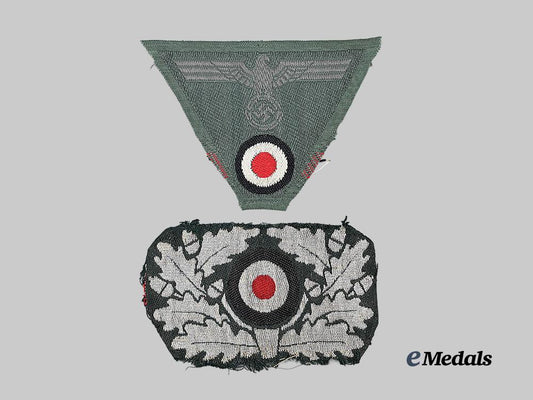
Germany, Heer. A Pair of Cap Insignia for Enlisted and Officer Ranks
M0676-143
United States. A Lot of Insignia & Badges
W8765
Saxony, Kingdom. An Army Belt Buckle for Enlisted Ranks
G63563
Germany, Wehrmacht. A 1939 Iron Cross I Class, Modified for Post-War Wear, by Wilhelm Deumer
G63561
-
Germany, Heer. A Set of General Staff Hauptmann Shoulder Boards
M0676-458
Add to CartRegular price $205 USDRegular price $0 USD Sale price $205 USDUnit price / per -
Germany, Heer. A Pair of Cap Insignia for Enlisted and Officer Ranks
M0676-143
Add to CartRegular price $205 USDRegular price $0 USD Sale price $205 USDUnit price / per -
United States. A Lot of Insignia & Badges
W8765
Add to CartRegular price $65 USDRegular price $0 USD Sale price $65 USDUnit price / per -
Saxony, Kingdom. An Army Belt Buckle for Enlisted Ranks
G63563
Add to CartRegular price $205 USDRegular price $0 USD Sale price $205 USDUnit price / per -
Germany, Wehrmacht. A 1939 Iron Cross I Class, Modified for Post-War Wear, by Wilhelm Deumer
G63561
Add to CartRegular price $135 USDRegular price $0 USD Sale price $135 USDUnit price / per
Do you have a similar item you are interested in selling?
Please complete the form and our client care representatives will contact you.
Sell Item