LOADING ...
In response to evolving domestic opinion, eMedals Inc has made the conscious decision to remove the presentation of German Third Reich historical artifacts from our online catalogue. For three decades, eMedals Inc has made an effort to preserve history in all its forms. As historians and researchers, we have managed sensitive articles and materials with the greatest of care and respect for their past and present social context. We acknowledge the growing sentiments put forth by the Canadian public and have taken proactive actions to address this opinion.
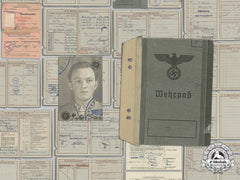
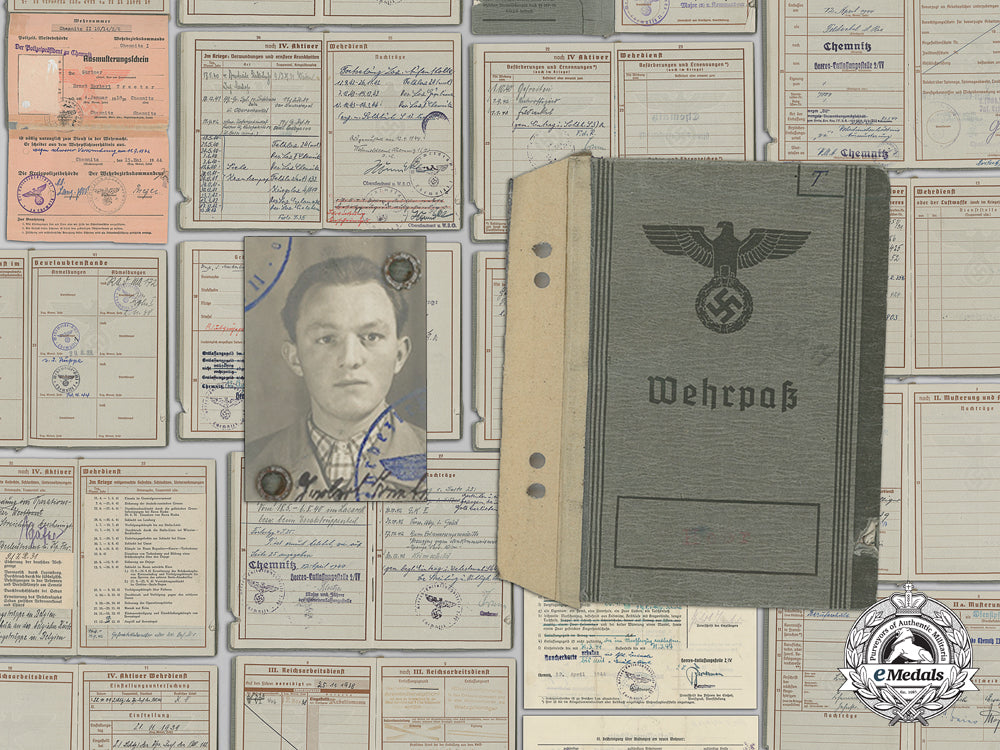
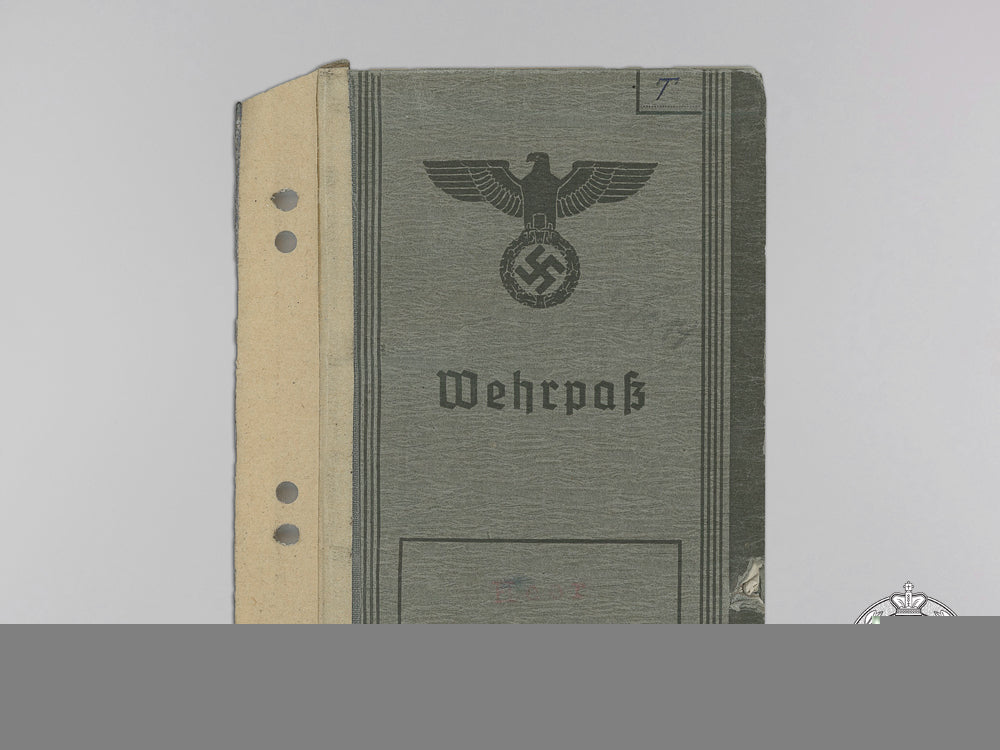
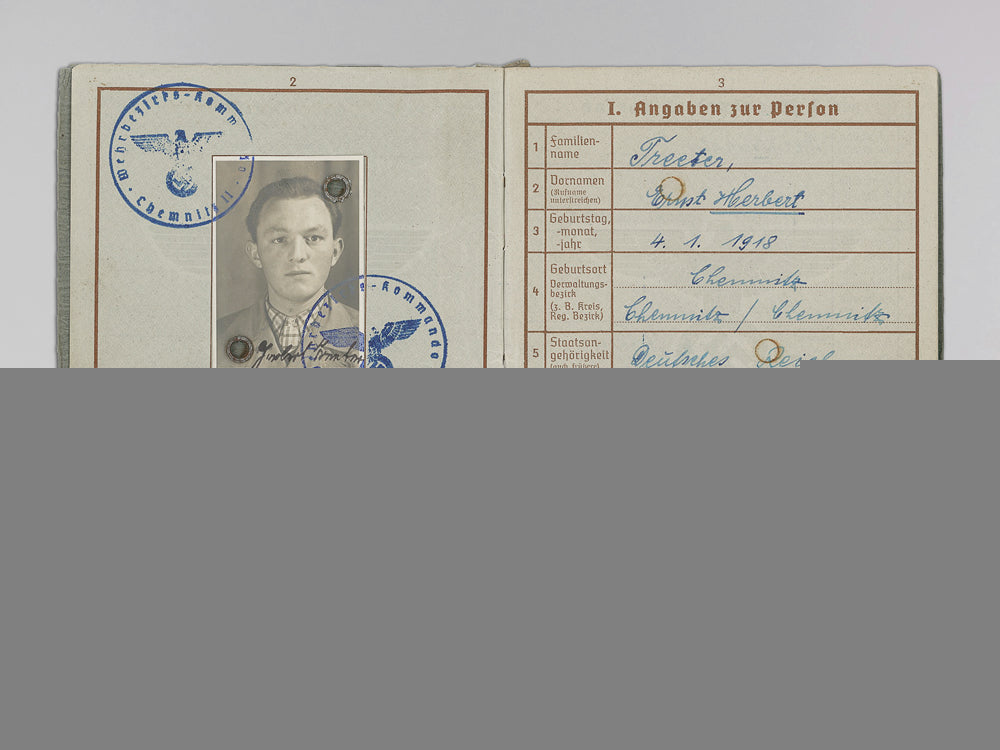
A Wehrpass To The 31St Grenadier-Regiment; Recipient Of Gold Grade Wound Badge
SKU: ITEM: G20657
Current Bid:
Your Max Bid:
Bid History:
Time Remaining:
Couldn't load pickup availability
Shipping Details
Shipping Details
eMedals offers rapid domestic and international shipping. Orders received prior to 12:00pm (EST) will be shipped on the same business day.* Orders placed on Canadian Federal holidays will be dispatched the subsequent business day. Courier tracking numbers are provided for all shipments. All items purchased from eMedals can be returned for a full monetary refund or merchandise credit, providing the criteria presented in our Terms & Conditions are met. *Please note that the addition of a COA may impact dispatch time.
Shipping Details
eMedals offers rapid domestic and international shipping. Orders received prior to 12:00pm (EST) will be shipped on the same business day.* Orders placed on Canadian Federal holidays will be dispatched the subsequent business day. Courier tracking numbers are provided for all shipments. All items purchased from eMedals can be returned for a full monetary refund or merchandise credit, providing the criteria presented in our Terms & Conditions are met. *Please note that the addition of a COA may impact dispatch time.
Description
Description
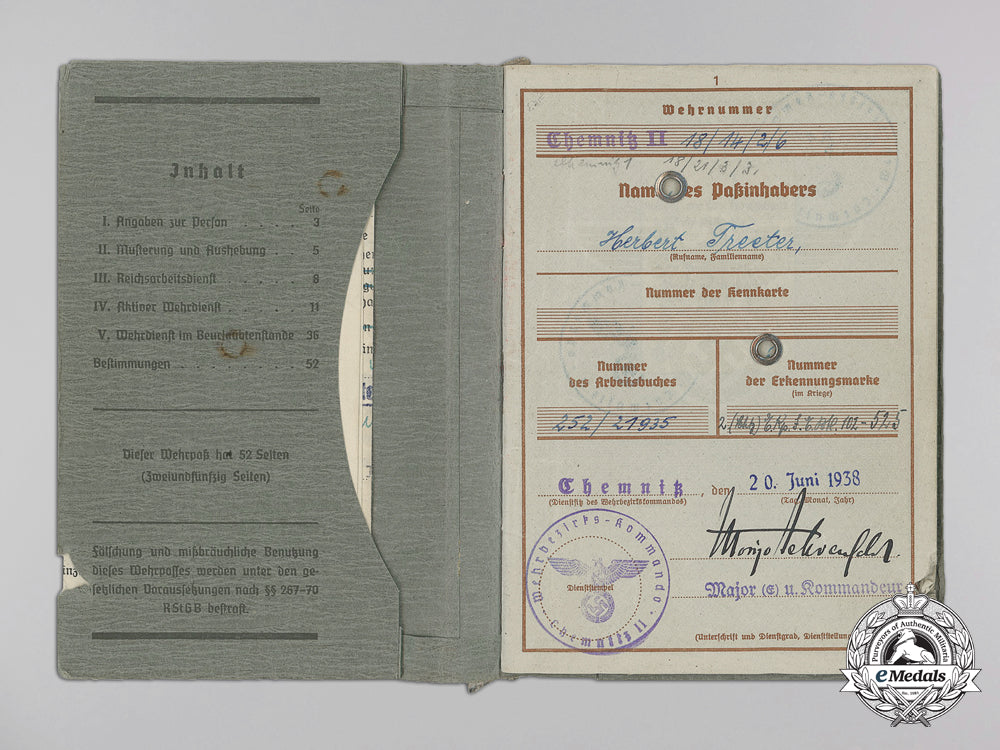
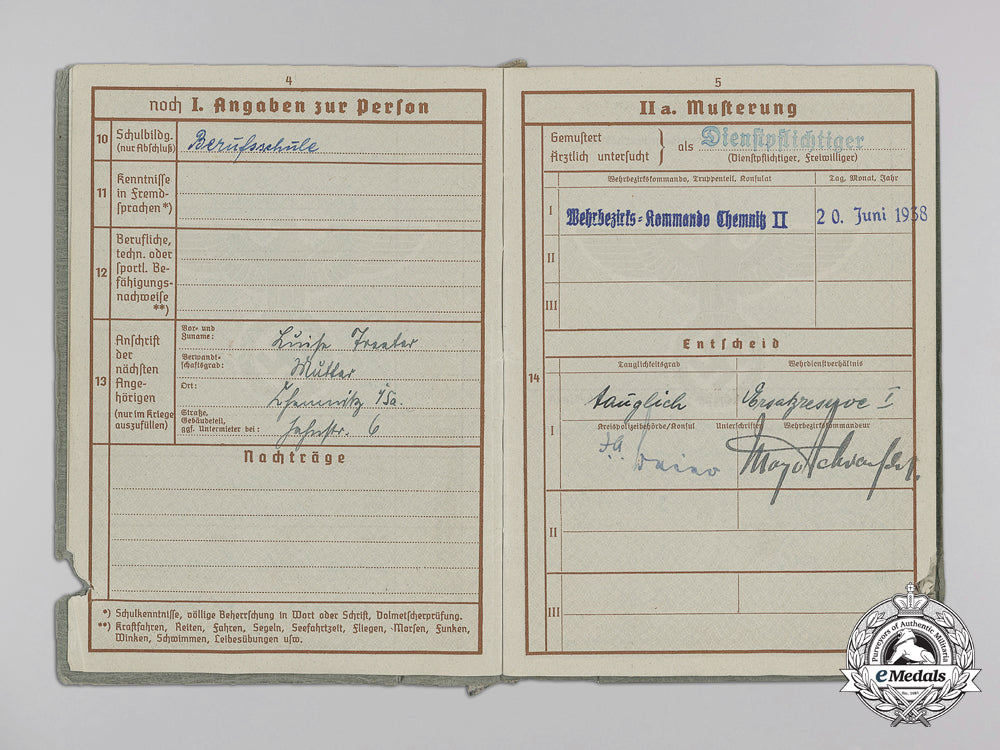
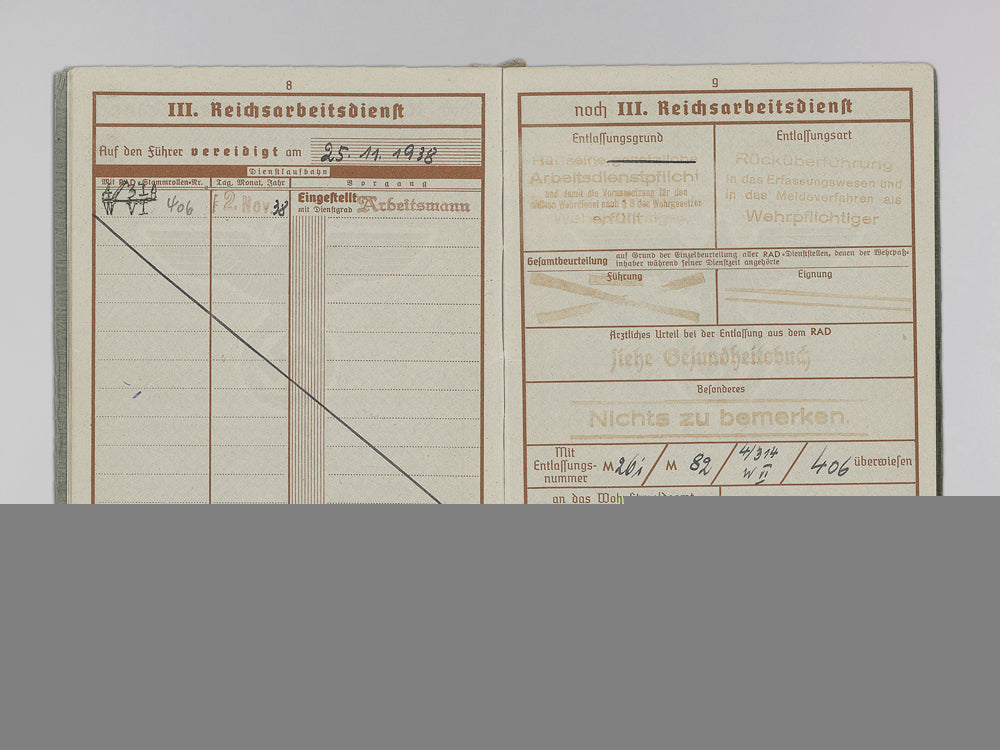
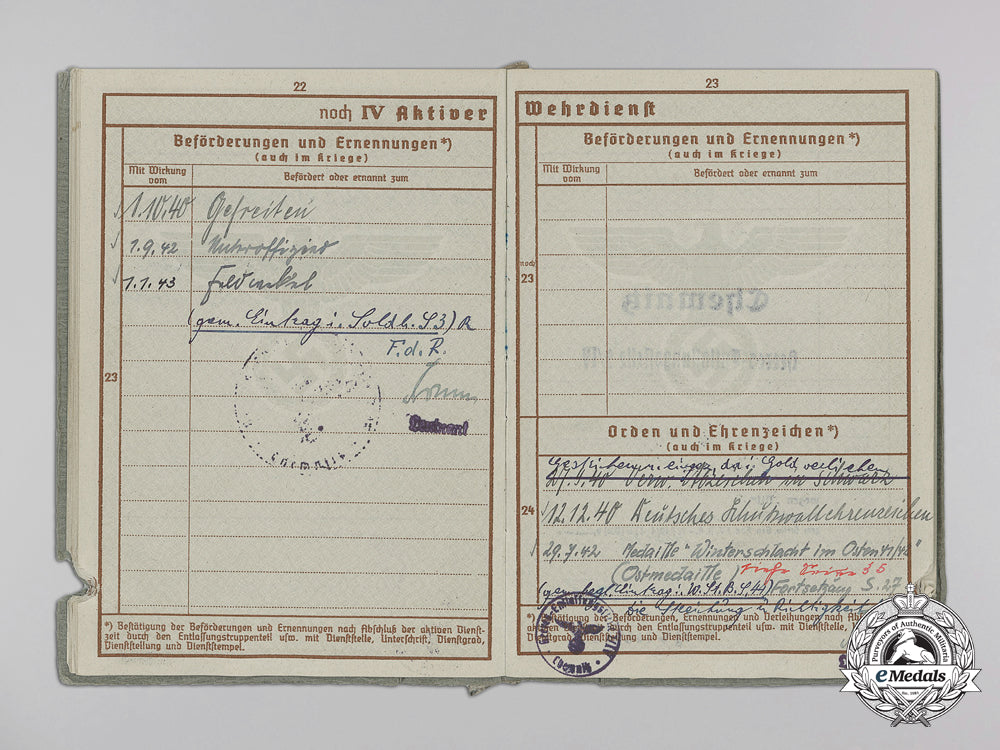
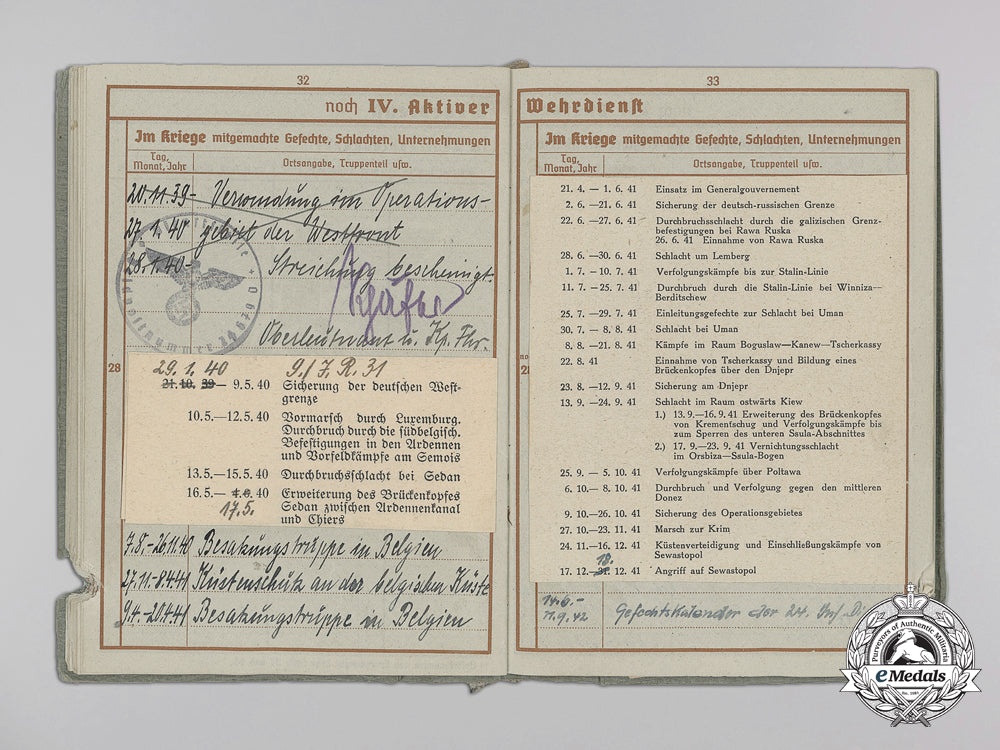
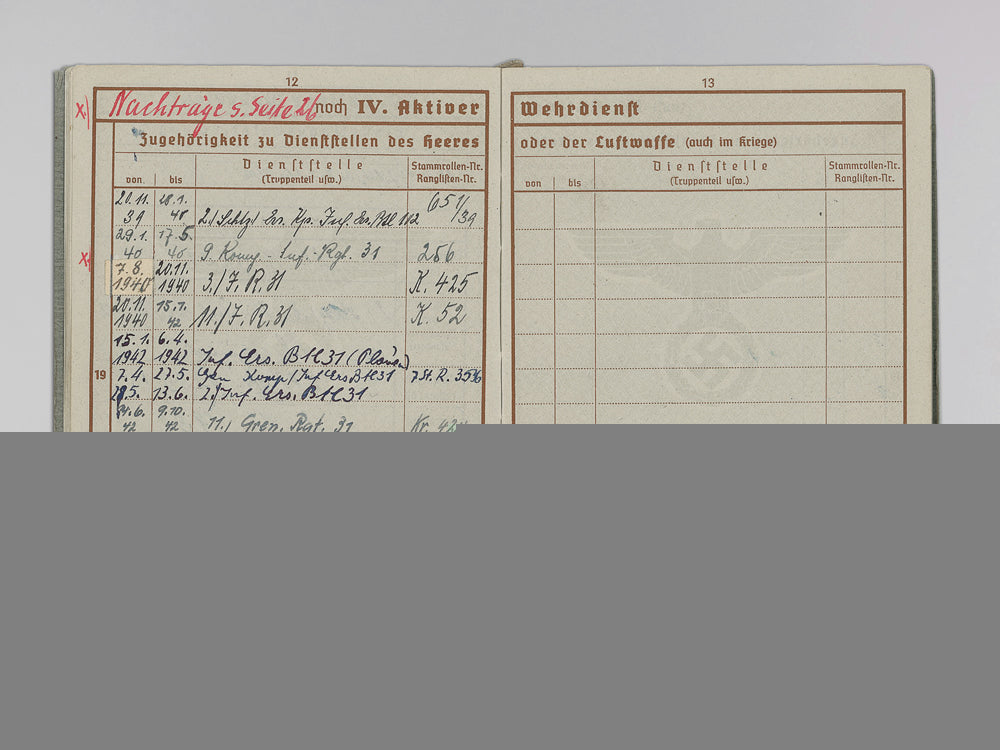
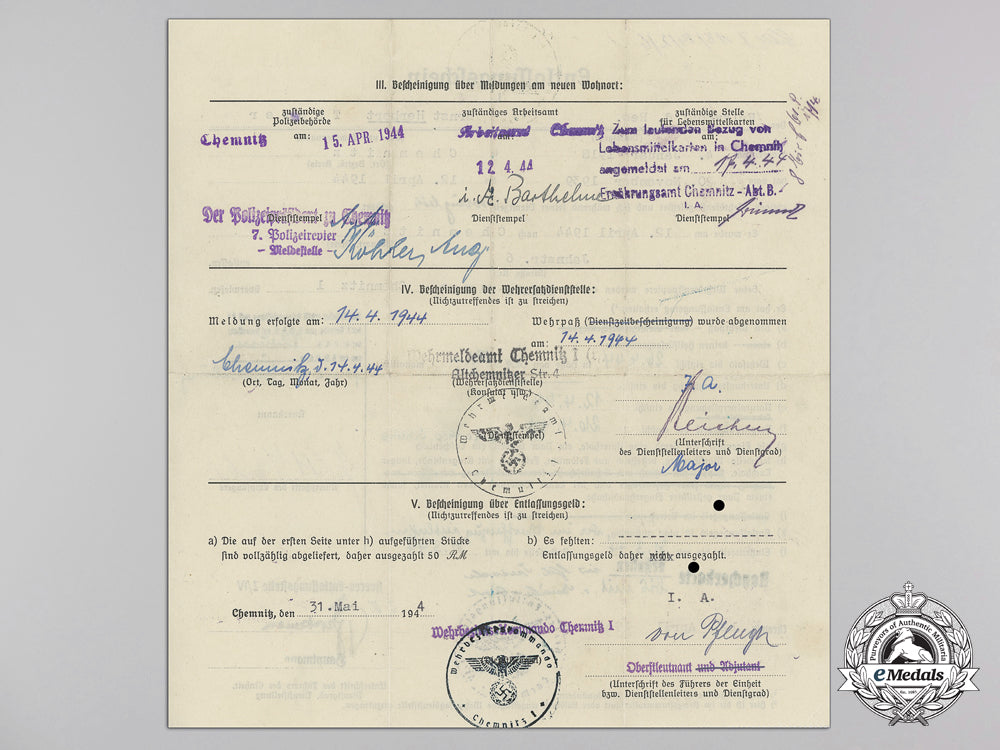
Marked with the Army eagle on the cover, inscribed "Wehrpass" below, stamped in red ink "Heer", dual stamped black and white photograph of Treeter with two eyelets, his signature across the photo and below it on page 2, multiple entries and stamps throughout the rest of the book, two glued in inserts: one on page 32 and the other on the inside back cover, the latter being his Military Exemption Certificate, his Discharge Certificate tucked inside the pocket on the inside cover, marked "D.R.G.M. (Deutsches Reichsgebrauchsmuster) 1 367 174" on the inside back cover and maker marked "Wetten & Co., Nationaler Werbedruck, Berlin SW 61" on the back cover, containing fifty-two pages printed in brown ink, plus cover printed in black ink, tape reinforced flap with four die-holes attached to the binding on the left side, 126 mm x 147 mm, tear at the lower right affecting the front cover and the inside pages, very light soiling on the exterior of the cover, better than very fine.
Footnote: This Wehrpass was issued to Herbert Treeter on June 20, 1938 in Chemnitz. Treeter was born on January 4, 1918 in Chemnitz and was an Evangelican Lutheran. He served with the Reichsarbeitsdienst (National Labor Service) from November 2, 1938 to March 25, 1939. On March 3, 1939, he was accepted as a volunteer for the 3rd Battalion of Gebirgs-Jäger-Regiment 98 (Mountain Troop Regiment 98) in Mittenwald and was expected to be called up by this unit on October 15, 1939, however, he was never posted to this unit. From November 20, 1939 to January 28, 1940, Treeter had basic training with the 2nd Schützen-Ersatz-Kompanie (Riflemen Replacement Company) of Infanterie-Ersatz-Bataillon 112 (Infantry Replacement Battalion 112). From January 29, 1940 to March 14, 1944, he was assigned to Infanterie-Regiment 31 (later renamed as Grenadier-Regiment 31) of the 24. Infanterie-Division (24th Infantry Division). Treeter qualified on the following weapons: Gewehr 98 K, l.M.G. 34, Luger, hand grenade, 08/15 light machine gun, and M.P. 40. From February 20 to March 22, 1941, he took part in an NCO training course with Infantry Regiment 31. In combat, he was to be employed as a Gruppenführer (Group Leader) and Melder (Messenger). During the Battle of France in 1940, Treeter was struck by a bullet on the left side of his chest on May 17th. He was initially treated at Field Hospital 24 (Motorized) and then hospitalized in Chemnitz through June 11, 1940. After recuperating, he served as part of an occupation troop in Belgium in 1940 and 1941. From the beginning of Operation Barbarossa,Treeter fought in many important battles with the 24th Infantry Division (Lemberg, Uman, Tscherkassy, Poltawa, Krim, Sewastopol, etc). On December 18, 1941, he was wounded during the siege of Sevastopol by artillery shell fragments, which struck his right shin and left thigh. Treeter was hospitalized again, this time in several hospitals. After recovering, he returned to the Russian Front and was seriously wounded again. He suffered a serious fracture of the lower left leg and a fracture of the right knee south of the (Ladogasee) Ladoga Lake. This wound was so severe that his left leg had to be amputated. He was again hospitalized in several hospitals, was assigned to Heeres-Entlassungsstelle 2/IV (Army Discharge Center 2/IV) on March 15, 1944, and finally discharged from the service on April 12, 1944. Pasted in the back of the Wehrpass is Treeter’s Ausmusterungsschein (Military Exemption Certificate) for being unfit for service (this certificate is dated May 15, 1944 and the photo has been removed). The Wehrpass also includes Treeter’s Entlassungsschein (Discharge Certificate) issued by Heeres-Entlassungsstelle 2/IV. During Treeter’s lengthy military service, he received the following awards: the Wound Badge in Black on September 27, 1940; the West Wall Mall on December 12, 1940; the East Medal on July 29, 1942; the Wound Badge in Silver on September 16, 1942; the Iron Cross 2nd Class on October 31, 1942; the Wound Badge in Gold on October 31, 1942; the Romanian Crusade Against Communism Medal with Krim Clasp on November 17, 1942; and the Krim Shield on December 30, 1942. This is a great Wehrpass for a decorated combat veteran who lost a leg in the war.
Description
Marked with the Army eagle on the cover, inscribed "Wehrpass" below, stamped in red ink "Heer", dual stamped black and white photograph of Treeter with two eyelets, his signature across the photo and below it on page 2, multiple entries and stamps throughout the rest of the book, two glued in inserts: one on page 32 and the other on the inside back cover, the latter being his Military Exemption Certificate, his Discharge Certificate tucked inside the pocket on the inside cover, marked "D.R.G.M. (Deutsches Reichsgebrauchsmuster) 1 367 174" on the inside back cover and maker marked "Wetten & Co., Nationaler Werbedruck, Berlin SW 61" on the back cover, containing fifty-two pages printed in brown ink, plus cover printed in black ink, tape reinforced flap with four die-holes attached to the binding on the left side, 126 mm x 147 mm, tear at the lower right affecting the front cover and the inside pages, very light soiling on the exterior of the cover, better than very fine.
Footnote: This Wehrpass was issued to Herbert Treeter on June 20, 1938 in Chemnitz. Treeter was born on January 4, 1918 in Chemnitz and was an Evangelican Lutheran. He served with the Reichsarbeitsdienst (National Labor Service) from November 2, 1938 to March 25, 1939. On March 3, 1939, he was accepted as a volunteer for the 3rd Battalion of Gebirgs-Jäger-Regiment 98 (Mountain Troop Regiment 98) in Mittenwald and was expected to be called up by this unit on October 15, 1939, however, he was never posted to this unit. From November 20, 1939 to January 28, 1940, Treeter had basic training with the 2nd Schützen-Ersatz-Kompanie (Riflemen Replacement Company) of Infanterie-Ersatz-Bataillon 112 (Infantry Replacement Battalion 112). From January 29, 1940 to March 14, 1944, he was assigned to Infanterie-Regiment 31 (later renamed as Grenadier-Regiment 31) of the 24. Infanterie-Division (24th Infantry Division). Treeter qualified on the following weapons: Gewehr 98 K, l.M.G. 34, Luger, hand grenade, 08/15 light machine gun, and M.P. 40. From February 20 to March 22, 1941, he took part in an NCO training course with Infantry Regiment 31. In combat, he was to be employed as a Gruppenführer (Group Leader) and Melder (Messenger). During the Battle of France in 1940, Treeter was struck by a bullet on the left side of his chest on May 17th. He was initially treated at Field Hospital 24 (Motorized) and then hospitalized in Chemnitz through June 11, 1940. After recuperating, he served as part of an occupation troop in Belgium in 1940 and 1941. From the beginning of Operation Barbarossa,Treeter fought in many important battles with the 24th Infantry Division (Lemberg, Uman, Tscherkassy, Poltawa, Krim, Sewastopol, etc). On December 18, 1941, he was wounded during the siege of Sevastopol by artillery shell fragments, which struck his right shin and left thigh. Treeter was hospitalized again, this time in several hospitals. After recovering, he returned to the Russian Front and was seriously wounded again. He suffered a serious fracture of the lower left leg and a fracture of the right knee south of the (Ladogasee) Ladoga Lake. This wound was so severe that his left leg had to be amputated. He was again hospitalized in several hospitals, was assigned to Heeres-Entlassungsstelle 2/IV (Army Discharge Center 2/IV) on March 15, 1944, and finally discharged from the service on April 12, 1944. Pasted in the back of the Wehrpass is Treeter’s Ausmusterungsschein (Military Exemption Certificate) for being unfit for service (this certificate is dated May 15, 1944 and the photo has been removed). The Wehrpass also includes Treeter’s Entlassungsschein (Discharge Certificate) issued by Heeres-Entlassungsstelle 2/IV. During Treeter’s lengthy military service, he received the following awards: the Wound Badge in Black on September 27, 1940; the West Wall Mall on December 12, 1940; the East Medal on July 29, 1942; the Wound Badge in Silver on September 16, 1942; the Iron Cross 2nd Class on October 31, 1942; the Wound Badge in Gold on October 31, 1942; the Romanian Crusade Against Communism Medal with Krim Clasp on November 17, 1942; and the Krim Shield on December 30, 1942. This is a great Wehrpass for a decorated combat veteran who lost a leg in the war.

You May Also Like
United Kingdom. The Handley Page Halifax, by K. A. Merrick, Signed
GB8679
United Kingdom. The Boer War Casualty Roll 1899-1902, Alexander M. Palmer
GB8680
Italy, Kingdom. An Order of the Crown, Knight in Gold
M0205-64
Finland, Republic. An Order of the Lion, Cross of Merit in Case
M0205-63
Belgium, Kingdom. An Order of the Crown and an Order of Leopold II, Two Knights
M0205-62
-
United Kingdom. The Handley Page Halifax, by K. A. Merrick, Signed
GB8679
Add to CartRegular price $200 USDRegular price $0 USD Sale price $200 USDUnit price / per -
United Kingdom. The Boer War Casualty Roll 1899-1902, Alexander M. Palmer
GB8680
Add to CartRegular price $75 USDRegular price $0 USD Sale price $75 USDUnit price / per -
Italy, Kingdom. An Order of the Crown, Knight in Gold
M0205-64
Add to CartRegular price $200 USDRegular price $0 USD Sale price $200 USDUnit price / per -
Finland, Republic. An Order of the Lion, Cross of Merit in Case
M0205-63
Add to CartRegular price $125 USDRegular price $0 USD Sale price $125 USDUnit price / per -
Belgium, Kingdom. An Order of the Crown and an Order of Leopold II, Two Knights
M0205-62
Add to CartRegular price $170 USDRegular price $0 USD Sale price $170 USDUnit price / per
Do you have a similar item you are interested in selling?
Please complete the form and our client care representatives will contact you.
Sell Item