
LOADING ...
In response to evolving domestic opinion, eMedals Inc has made the conscious decision to remove the presentation of German Third Reich historical artifacts from our online catalogue. For three decades, eMedals Inc has made an effort to preserve history in all its forms. As historians and researchers, we have managed sensitive articles and materials with the greatest of care and respect for their past and present social context. We acknowledge the growing sentiments put forth by the Canadian public and have taken proactive actions to address this opinion.
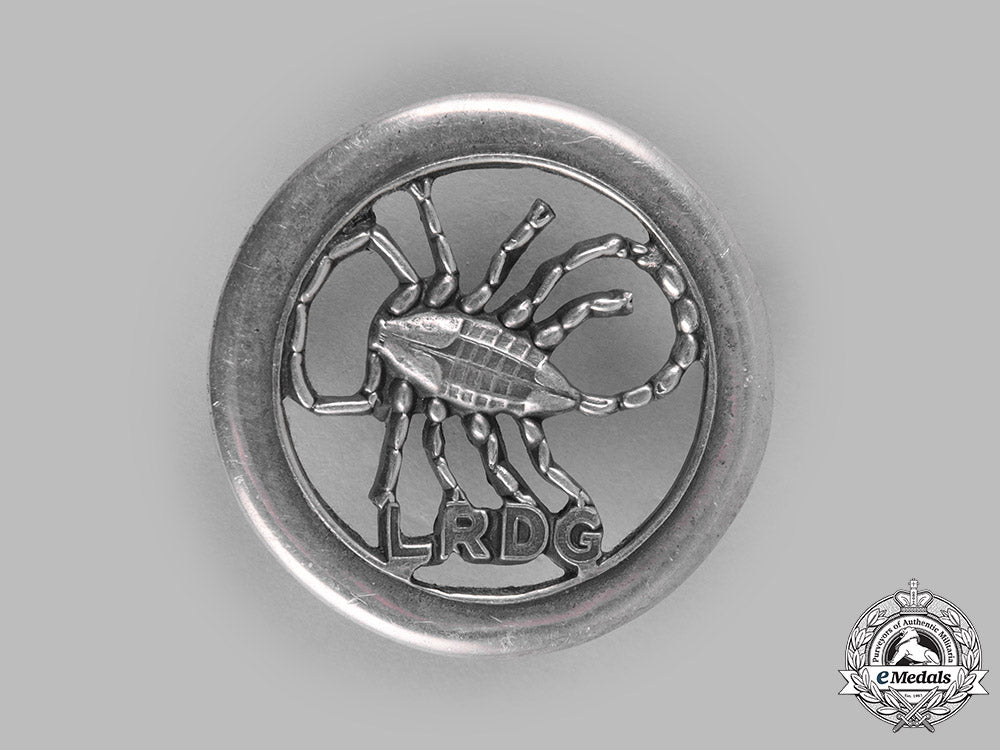
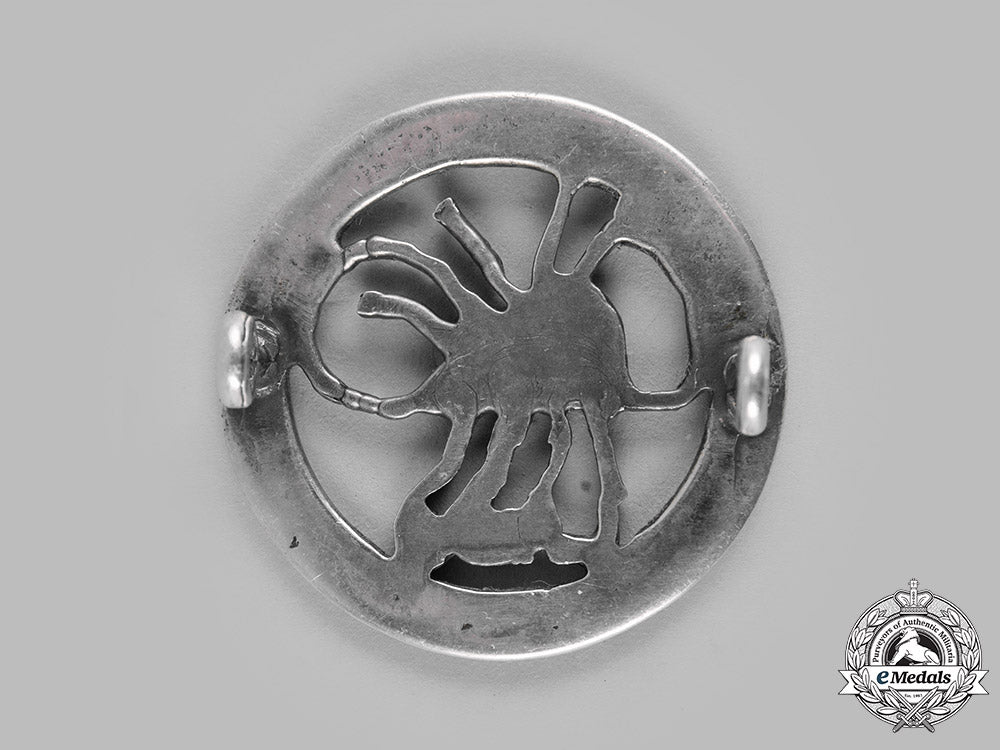
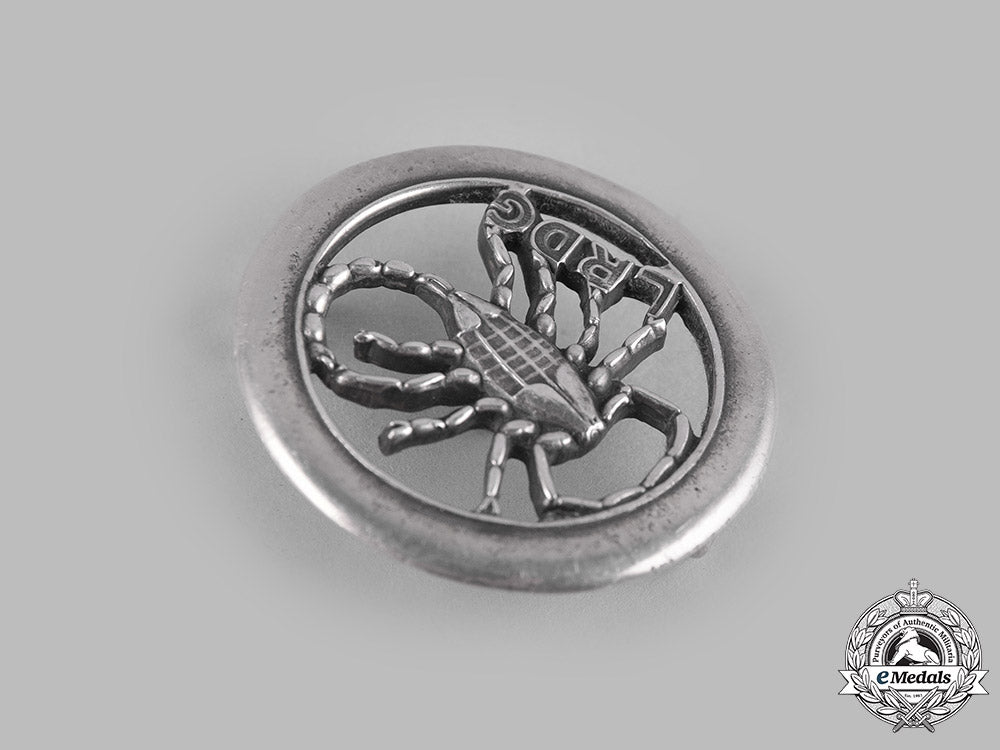
United Kingdom. A Long Range Desert Group Cap Badge, Private Made
SKU: ITEM: M0014-70
Current Bid:
Your Max Bid:
Bid History:
Time Remaining:
Couldn't load pickup availability
Shipping Details
Shipping Details
eMedals offers rapid domestic and international shipping. Orders received prior to 12:00pm (EST) will be shipped on the same business day.* Orders placed on Canadian Federal holidays will be dispatched the subsequent business day. Courier tracking numbers are provided for all shipments. All items purchased from eMedals can be returned for a full monetary refund or merchandise credit, providing the criteria presented in our Terms & Conditions are met. *Please note that the addition of a COA may impact dispatch time.
Shipping Details
eMedals offers rapid domestic and international shipping. Orders received prior to 12:00pm (EST) will be shipped on the same business day.* Orders placed on Canadian Federal holidays will be dispatched the subsequent business day. Courier tracking numbers are provided for all shipments. All items purchased from eMedals can be returned for a full monetary refund or merchandise credit, providing the criteria presented in our Terms & Conditions are met. *Please note that the addition of a COA may impact dispatch time.
Description
Description
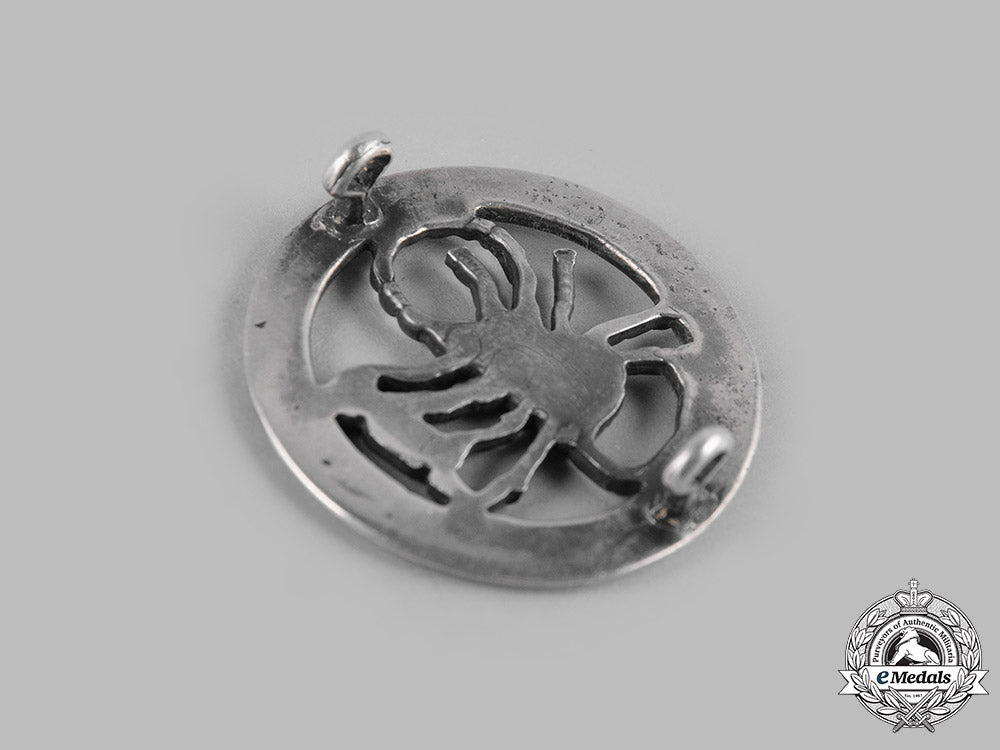
In silvered metal, illustrating a scorpion above the letters "LRDG", within a wide bordered circle, measuring 32.8 mm in diameter, both lugs intact, very light contact, near extremely fine.
Footnote: The Long Range Desert Group (LRDG) was a reconnaissance and raiding unit of the British Army during the Second World War. Originally called the Long Range Patrol (LRP), the unit was founded in Egypt in June 1940 by Major Ralph A. Bagnold, acting under the direction of General Archibald Wavell. Bagnold was assisted by Captain Patrick Clayton and Captain William Shaw. At first the majority of the men were from New Zealand, but they were soon joined by Southern Rhodesian and British volunteers, whereupon new sub-units were formed and the name was changed to the better-known Long Range Desert Group (LRDG). The LRDG never numbered more than 350 men, all of whom were volunteers. The LRDG was formed specifically to carry out deep penetration, covert reconnaissance patrols and intelligence missions from behind Italian lines, although they sometimes engaged in combat operations.
Because the LRDG were experts in desert navigation they were sometimes assigned to guide other units, including the Special Air Service and secret agents across the desert. During the Desert Campaign between December 1940 and April 1943, the vehicles of the LRDG operated constantly behind the Axis lines, missing a total of only fifteen days during the entire period. Possibly their most notable offensive action was during Operation Caravan, an attack on the town of Barce and its associated airfield, on the night of September 13, 1942. However, their most vital role was the "Road Watch", during which they clandestinely monitored traffic on the main road from Tripoli to Benghazi, transmitting the intelligence to British Army Headquarters. With the surrender of the Axis forces in Tunisia in May 1943, the LRDG changed roles and moved operations to the eastern Mediterranean, carrying out missions in the Greek islands, Italy and the Balkans. After the end of the war in Europe, the leaders of the LRDG made a request to the War Office for the unit to be transferred to the Far East to conduct operations against the Japanese Empire. The request was declined and the LRDG was disbanded in August 1945.
Description
In silvered metal, illustrating a scorpion above the letters "LRDG", within a wide bordered circle, measuring 32.8 mm in diameter, both lugs intact, very light contact, near extremely fine.
Footnote: The Long Range Desert Group (LRDG) was a reconnaissance and raiding unit of the British Army during the Second World War. Originally called the Long Range Patrol (LRP), the unit was founded in Egypt in June 1940 by Major Ralph A. Bagnold, acting under the direction of General Archibald Wavell. Bagnold was assisted by Captain Patrick Clayton and Captain William Shaw. At first the majority of the men were from New Zealand, but they were soon joined by Southern Rhodesian and British volunteers, whereupon new sub-units were formed and the name was changed to the better-known Long Range Desert Group (LRDG). The LRDG never numbered more than 350 men, all of whom were volunteers. The LRDG was formed specifically to carry out deep penetration, covert reconnaissance patrols and intelligence missions from behind Italian lines, although they sometimes engaged in combat operations.
Because the LRDG were experts in desert navigation they were sometimes assigned to guide other units, including the Special Air Service and secret agents across the desert. During the Desert Campaign between December 1940 and April 1943, the vehicles of the LRDG operated constantly behind the Axis lines, missing a total of only fifteen days during the entire period. Possibly their most notable offensive action was during Operation Caravan, an attack on the town of Barce and its associated airfield, on the night of September 13, 1942. However, their most vital role was the "Road Watch", during which they clandestinely monitored traffic on the main road from Tripoli to Benghazi, transmitting the intelligence to British Army Headquarters. With the surrender of the Axis forces in Tunisia in May 1943, the LRDG changed roles and moved operations to the eastern Mediterranean, carrying out missions in the Greek islands, Italy and the Balkans. After the end of the war in Europe, the leaders of the LRDG made a request to the War Office for the unit to be transferred to the Far East to conduct operations against the Japanese Empire. The request was declined and the LRDG was disbanded in August 1945.

You May Also Like
Cuba, Republic. A Group of Patriotic and Organizational Insignia
M0440-5
United Kingdom. The Handley Page Halifax, by K. A. Merrick, Signed
GB8679
United Kingdom. The Boer War Casualty Roll 1899-1902, Alexander M. Palmer
GB8680
Germany, Heer. A Soldbuch to Hellmuth May, Territorial Army
G63191
Germany, Wehrmacht. A Mint Turkestan Legion Sleeve Shield, First Pattern
G63166
-
Cuba, Republic. A Group of Patriotic and Organizational Insignia
M0440-5
Add to CartRegular price $135 USDRegular price $0 USD Sale price $135 USDUnit price / per -
United Kingdom. The Handley Page Halifax, by K. A. Merrick, Signed
GB8679
Add to CartRegular price $200 USDRegular price $0 USD Sale price $200 USDUnit price / per -
United Kingdom. The Boer War Casualty Roll 1899-1902, Alexander M. Palmer
GB8680
Add to CartRegular price $75 USDRegular price $0 USD Sale price $75 USDUnit price / per -
Germany, Heer. A Soldbuch to Hellmuth May, Territorial Army
G63191
Add to CartRegular price $135 USDRegular price $0 USD Sale price $135 USDUnit price / per -
Germany, Wehrmacht. A Mint Turkestan Legion Sleeve Shield, First Pattern
G63166
Add to CartRegular price $135 USDRegular price $0 USD Sale price $135 USDUnit price / per
Do you have a similar item you are interested in selling?
Please complete the form and our client care representatives will contact you.
Sell Item